Abu Simbel Trip Book a tour
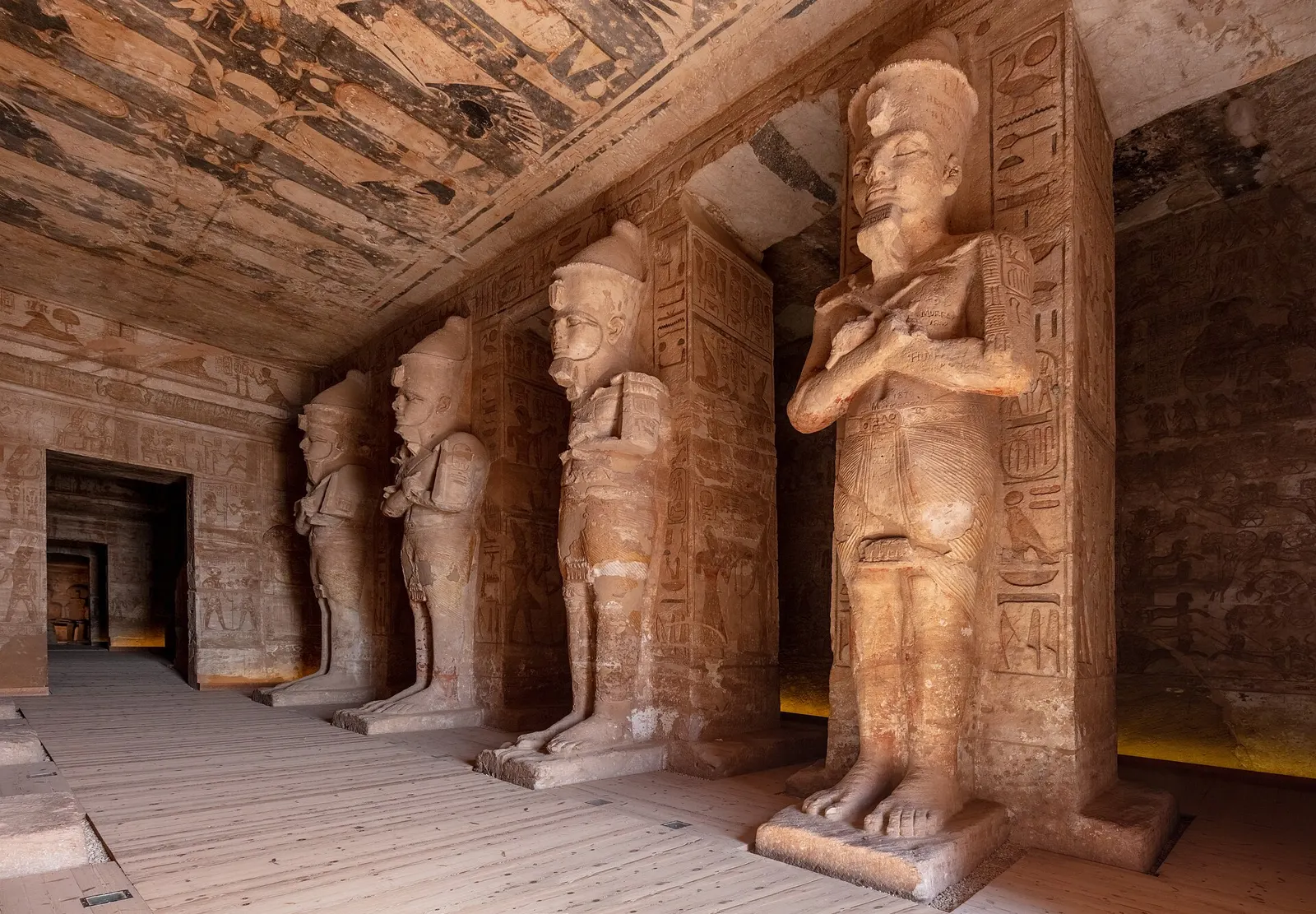
The pillared hall inside the Great Temple of Abu Simbel

Abu Simbel history

Inside the Great Temple, eight pillars carved as Ramesses II hold up the first hall, and the rooms get smaller all the way to a sanctuary with four seated figures. Ramesses II had both temples cut into the mountain from about 1264 to 1244 BC.
Four seated statues of Ramesses II
Photo: Diego Delso, CC BY-SA 4.0

The facade

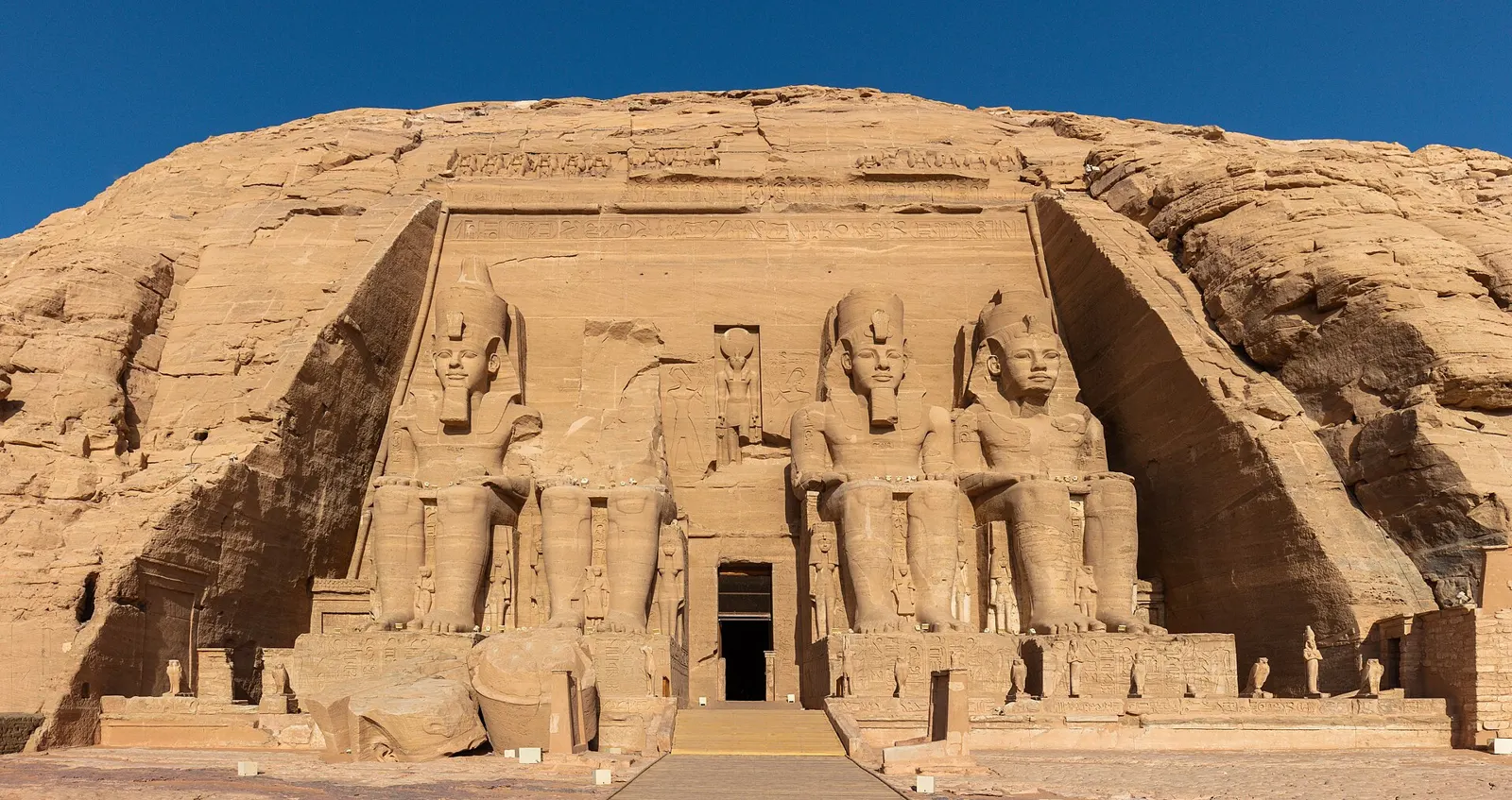
Four seated statues of Ramesses II

Four seated statues of Ramesses II, each 20 m (66 ft) tall, flank the entrance of the Great Temple.

The facade behind them is 33 m (108 ft) high and 38 m (125 ft) wide.

The facade carries a frieze of twenty-two baboons worshipping the rising sun with raised arms.

One of the four seated statues collapsed in an ancient earthquake, and its pieces still lie on the ground.

Smaller statues stand next to the legs of the Ramesses statues, none higher than the pharaoh's knees.

The pillared hall
Photo: Diego Delso, CC BY-SA 4.0

Inside

The pillared hall

Eight huge pillars carved as Ramesses in the form of Osiris hold up the first hall.

The hall is 18 m (59 ft) long and 16.7 m (55 ft) wide.

Inside the Great Temple, the rooms get smaller from the entrance to the sanctuary.

The second hall has four pillars decorated with scenes of offerings to the gods.

The Battle of Kadesh
Photo: Diego Delso, CC BY-SA 4.0

The reliefs

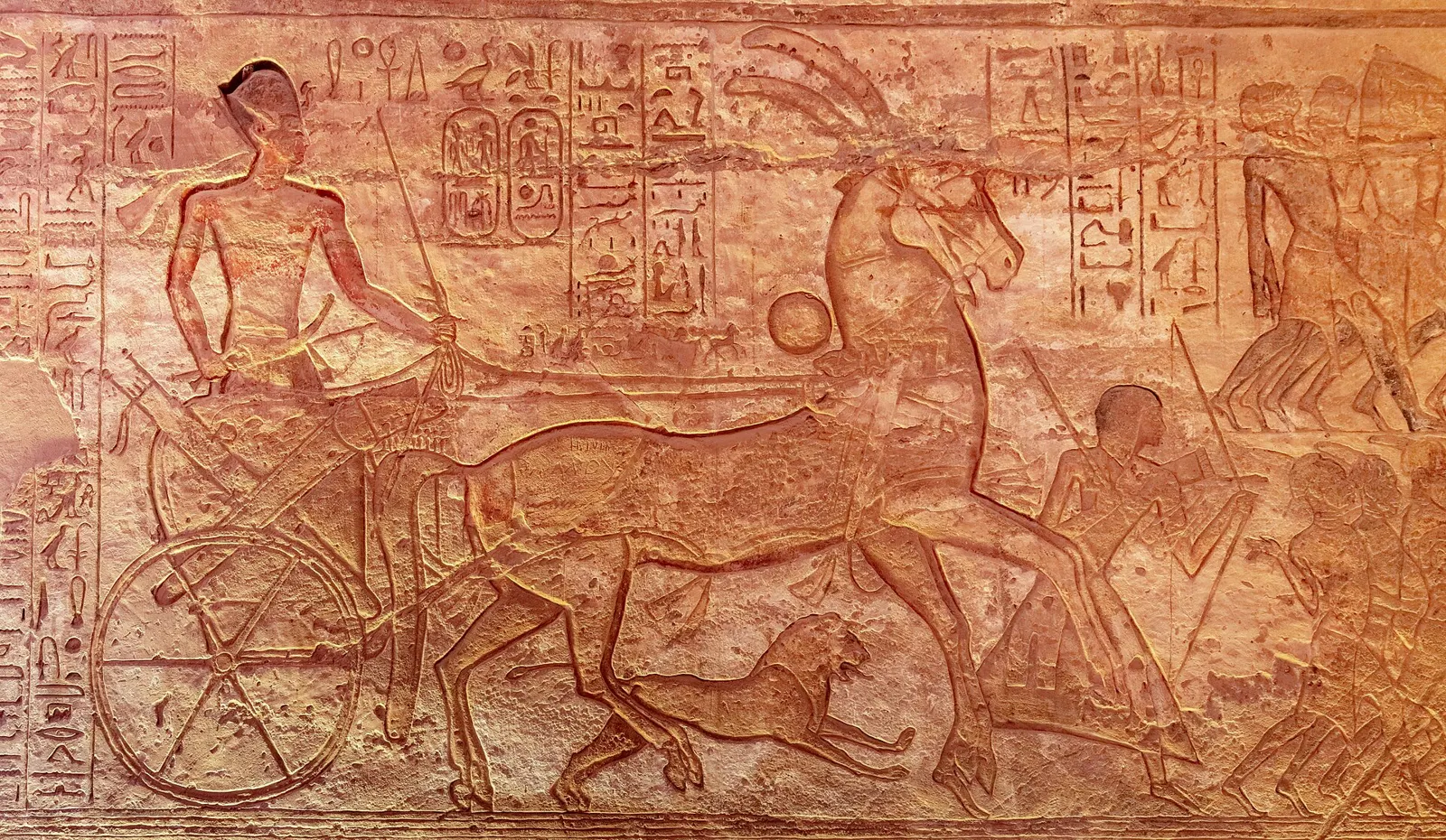
The Battle of Kadesh

Carvings inside the Great Temple celebrate Ramesses II at the Battle of Kadesh.

The most famous relief shows Ramesses in his chariot, shooting arrows at fleeing enemies at Kadesh.

Four gods at the back of the temple
Photo: Diego Delso, CC BY-SA 4.0

The sanctuary

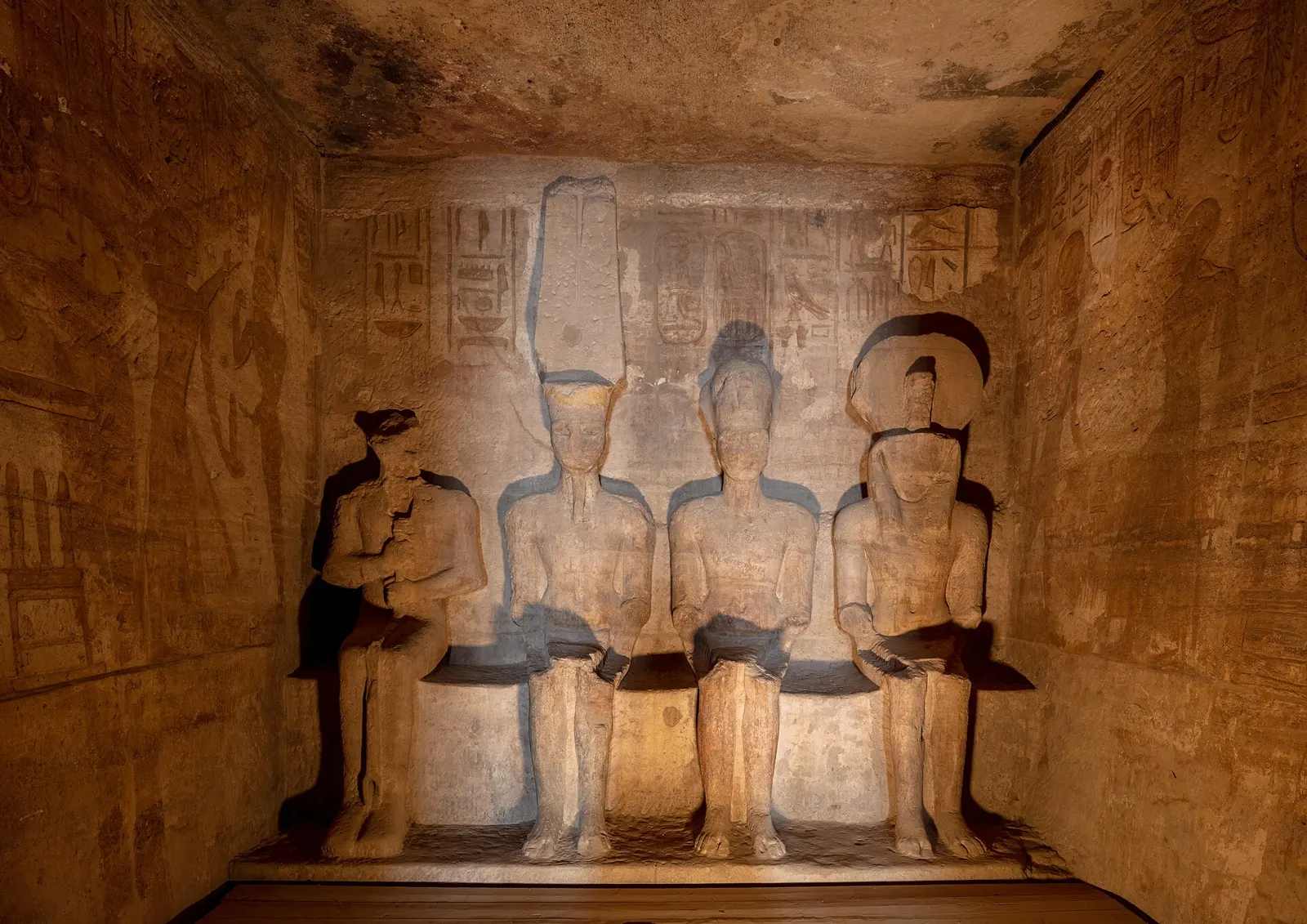
Four gods at the back of the temple

In the sanctuary, four seated figures are cut into the rock: Ra-Horakhty, the deified Ramesses, Amun Ra and Ptah.

At dawn the sun reaches the back of the Great Temple and lights three of the four seated statues.

Ptah, the fourth statue, stays in the shadow.

When the sun reaches them
Hathor and Nefertari
Photo: Diego Delso, CC BY-SA 4.0

The Small Temple

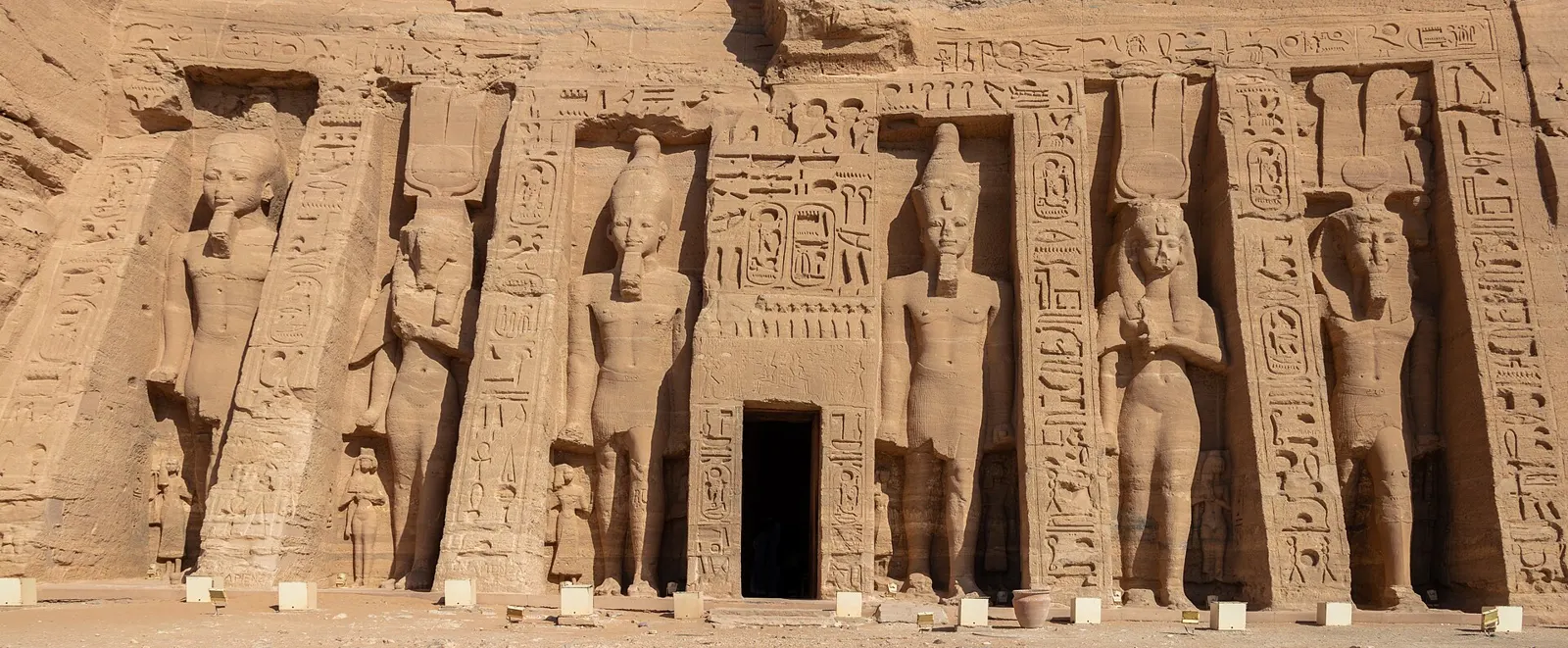
Hathor and Nefertari

The Small Temple, just north of the Great Temple, is dedicated to the goddess Hathor and Queen Nefertari.

The statues on its facade are slightly more than 10 m (33 ft) high.

The Small Temple is one of very few cases in Egyptian art where the statues of the king and his queen are the same size.

Six pillars hold up the hall of the Small Temple.

Buried in sand
Photo: Maxime Du Camp, Public domain

Lost and found

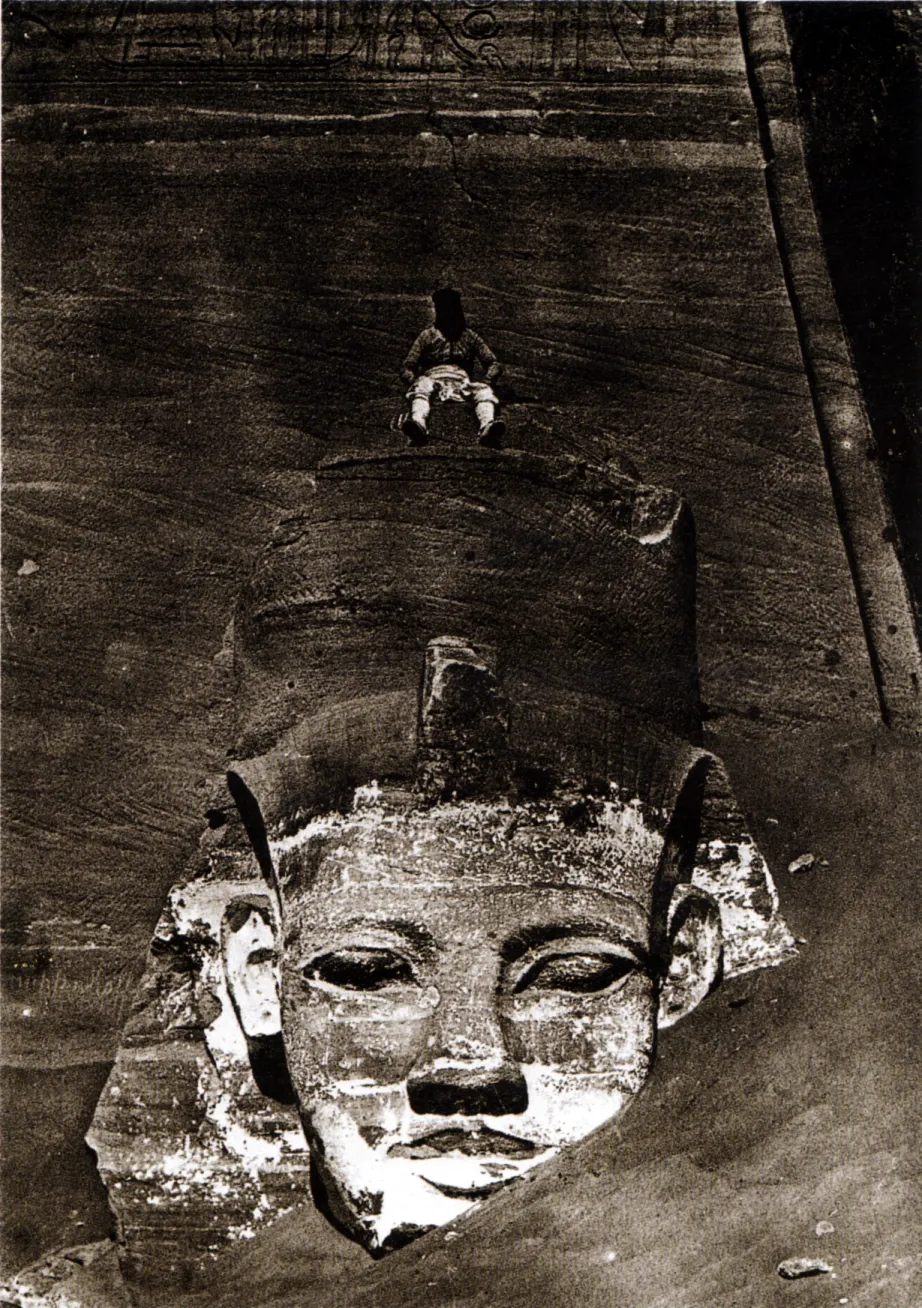
Buried in sand

By the 6th century BC, sand already covered the statues of the Great Temple up to their knees.

Europeans did not know the temple until March 1813, when the Swiss researcher Johann Ludwig Burckhardt found the Small Temple and the top frieze of the Great Temple.

Giovanni Belzoni and his party entered the Great Temple on 1 August 1817.
The sand in front of the Great Temple was cleared for good in 1909-1910, led by Alessandro Barsanti.

Moved to higher ground
Photo: Per-Olow Anderson, Public domain

1965–1968

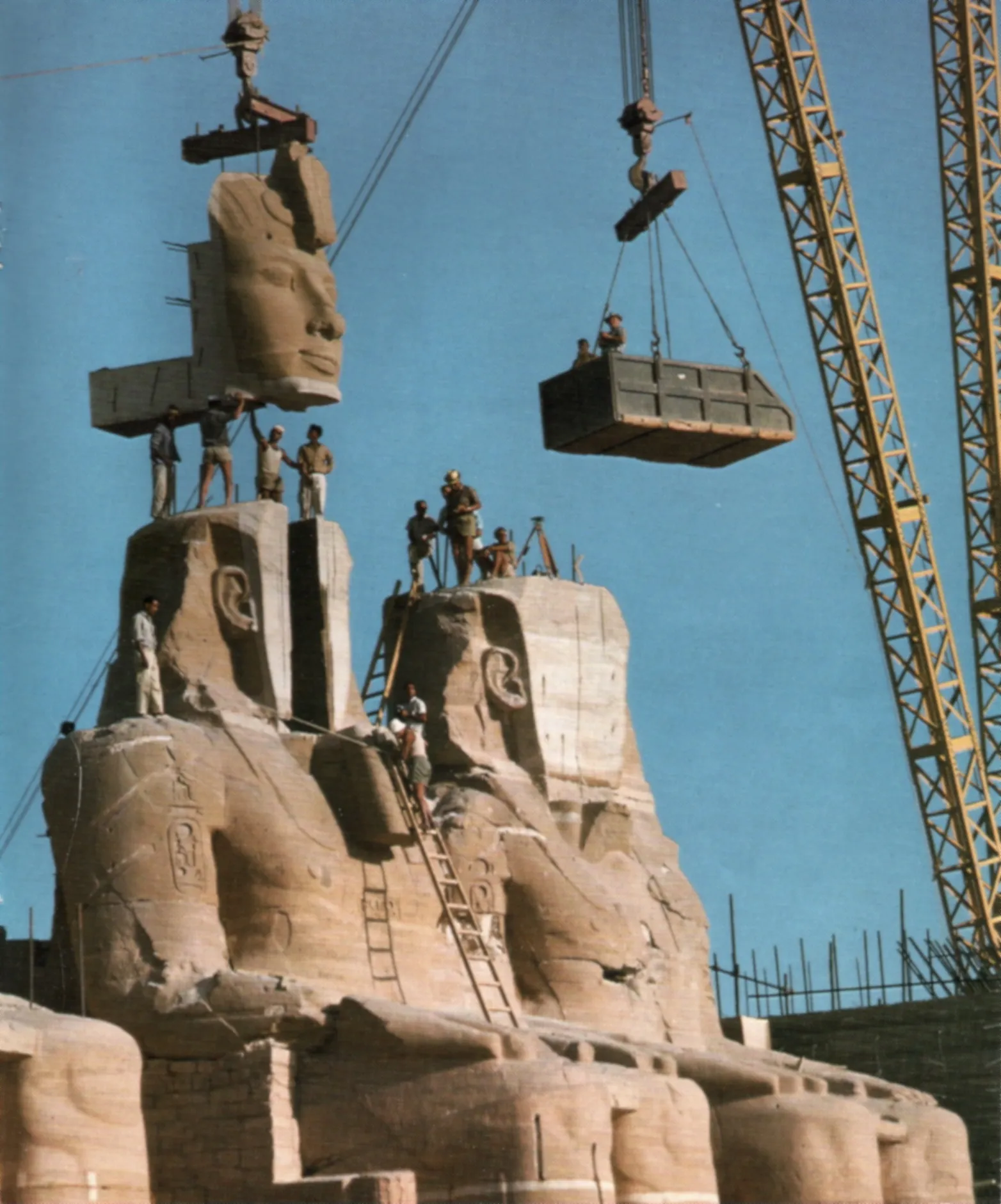
Moved to higher ground

The two temples were moved to higher ground in 1968, after the Aswan High Dam threatened to flood them.

The Great Temple was rebuilt 208 m (682 ft) further inland and 65 m (213 ft) higher; the Small Temple 67 m (220 ft) higher.

How Abu Simbel was moved

Visit

Guided tours of Abu Simbel

Time at the site is usually short, with little time to read about the carvings inside. A guide reads the walls with you.

Powered by GetYourGuide

History questions

Who built Abu Simbel?
Both temples were cut into the mountainside in the 13th century BC, under Pharaoh Ramesses II. Work on the temple complex started around 1264 BC and lasted about 20 years, until 1244 BC.
What is inside the Abu Simbel temple?
Eight huge pillars carved as Ramesses in the form of Osiris hold up the first hall. Inside the Great Temple, the rooms get smaller from the entrance to the sanctuary. In the sanctuary, four seated figures are cut into the rock: Ra-Horakhty, the deified Ramesses, Amun Ra and Ptah.
Who was the Small Temple built for?
The Small Temple, just north of the Great Temple, is dedicated to the goddess Hathor and Queen Nefertari.
Who found Abu Simbel?
Europeans did not know the temple until March 1813, when the Swiss researcher Johann Ludwig Burckhardt found the Small Temple and the top frieze of the Great Temple. Giovanni Belzoni and his party entered the Great Temple on 1 August 1817.